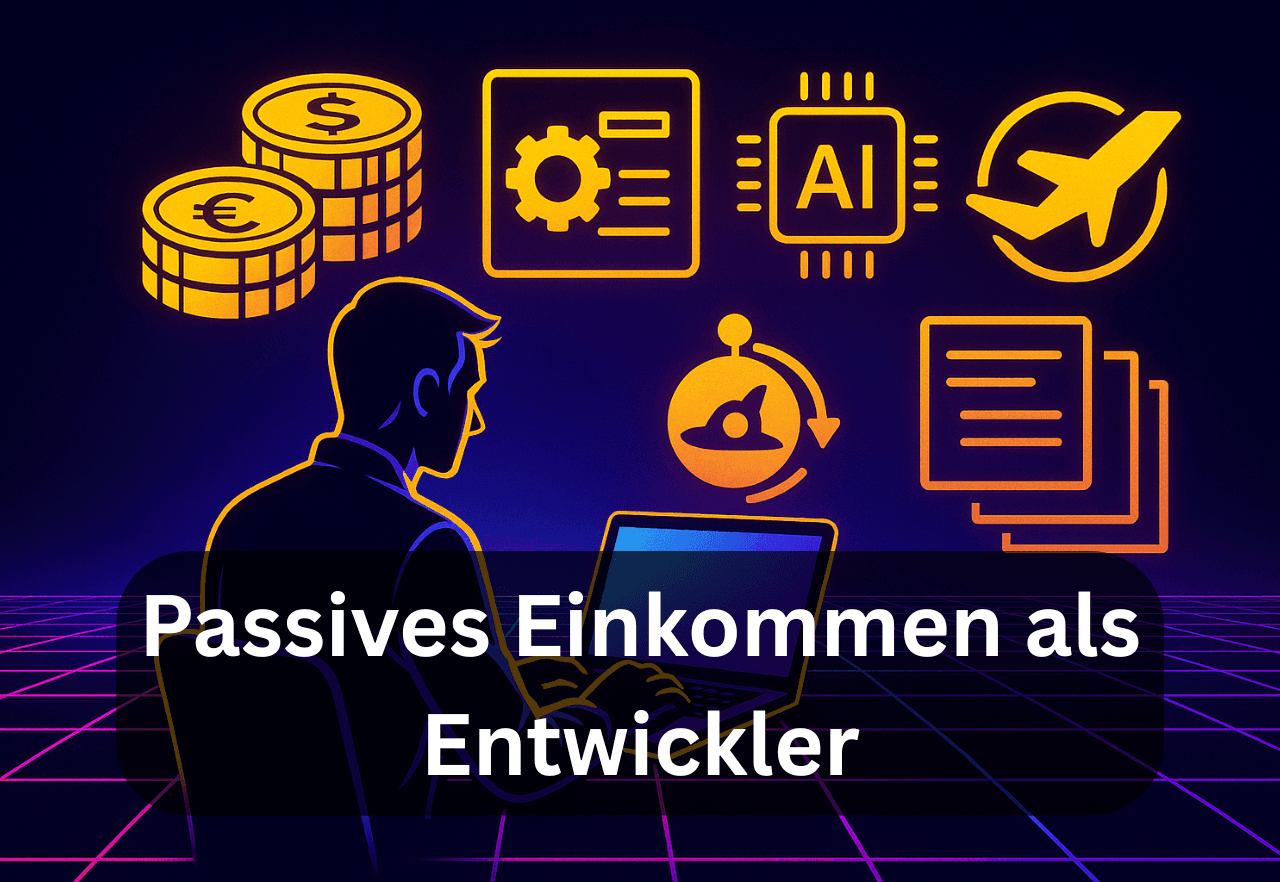
How to Build Passive Income as a Developer Without Freelancing
More and more developers are looking for ways to stop trading their time one-to-one for money and instead build scalable sources of income. Unlike the classic hourly wage, initial work pays off multiple times over with passive income: Once you’ve created and marketed a digital product, it can continue to generate revenue long after completion. Digital products like templates, plugins, online courses, or Software-as-a-Service (SaaS) can be distributed worldwide, delivered automatically, and achieve high profit margins. In this article, you’ll learn about different product types and get a practical plan to go from your first concept to your first sales in 90 days.
Product Types for Passive Income
As a developer, you can create a variety of digital products that can be sold with no inventory and minimal effort. Particularly popular are templates (for websites, apps, or design), plugins and libraries (e.g., for content management systems or as JavaScript/Python packages), and online courses or e-books on technical topics. Online courses are especially suitable: Once produced (video, text, quiz), they generate continuous revenue without you having to teach live all the time.
SaaS offerings are also attractive: You develop a web application or tool where customers subscribe. Thanks to ongoing updates and support, you generate recurring income. With AI-powered tools, such as ML models or chatbots, you can automate processes or offer new features that interest many companies or developer groups.
Also worth mentioning are e-books and whitepapers (e.g., on niche topics), digital assets (icons, graphics, fonts), as well as templates and design sets for developers and marketers. The advantages are clear: No inventory, automated delivery, global reach, and high profit margins make digital products ideal for passive income.
Example formats: You could create an app template (e.g., a React theme), program a WordPress plugin, produce an online course on a framework, or offer a micro-SaaS (such as an analytics or automation tool). The important thing is to solve a specific problem. Each of these product types can be offered as a one-time purchase, subscription, or in bundles (packages of several products).
Choosing by Unfair Advantage and Target Audience
Before you start coding, you should carefully consider which niche you want to serve. The key is your unfair advantage: What experience, knowledge, or contacts do you have that others don’t? Are your ideas aimed at a specific target group (e.g., teachers, marketing teams, blockchain developers), and does that best match your expertise? The recommendation is: Don’t try to appeal to “everyone”, but focus on a specialized market. Success often lies in targeting a specialized niche rather than trying to reach everyone. For example, you could take a general concept planner and offer it as a teacher planner. Users in this target group are often willing to pay a higher price.
So, decide early on who your customers are and what specific needs they have. Find a niche that matches your expertise or leverages booming trends (e.g., AI tools, certain industries, edge computing, etc.). Your product decision should follow from this analysis. If you want to build a new AI tool, ask yourself if you already have experience in machine learning and which target group (e.g., developers, designers, analysts) would benefit most from your tool. Make your choice based on your strengths and the existing market. It’s recommended to look for niches with high demand and low competition.
Tip: Work out your idea in a short concept sheet (a kind of one-pager). What are you offering, who benefits, what is the value? With this clear positioning, you can focus development and marketing on the right customers.
Lean Validation of the Idea
Before you invest a lot of time in programming, you should test and validate your idea, following the Lean Startup method. This means you first invest as little effort as possible to check if there are actually customers for your product. The goal is to postpone the labor-intensive development work as much as possible. For example, you can create a simple landing page that briefly explains your product and includes an email waitlist or a buy button. If the page gets clicks and people sign up for the waitlist, that shows real interest.
Many successful founders use MVP tests and surveys: Ask questions on a landing page and in forums or start small ad campaigns to gather initial feedback. It’s important to get real signals (real email addresses, real interest), not just ask friends and acquaintances. If validation shows there is demand, you can proceed calmly with development. If not, you can adjust early or abandon the idea, potentially saving a lot of time and money.
Practical example: A software developer wanted to build a marketing analytics tool and first created only a website with a description and a “pre-sale” button. He ran a few Facebook ads. With just 100 euros in ad budget, he could see if people really clicked on “Buy now”. Within a few days, he had hundreds of interested people on the waitlist and knew there was demand.
Pricing and Bundle Offers
Once you’ve validated your idea and have a product, you need to set a price. The rule is: Think value-oriented. What is your product worth to the customer? A simple rule of thumb is not to price too low for new products. Many developers start with a one-time price for templates or e-books (e.g., €10–50) and a subscription price for SaaS or plugins with updates (e.g., €5–20 per month). You can also offer tiered pricing (basic/pro/enterprise versions), depending on how many features or users you provide. A freemium or tiered model is also recommended. A free basic version attracts customers who can then upgrade to a paid premium version.
Also consider bundles and packages: Offer related products together at a discount. Product bundling increases perceived value and creates cross-selling opportunities. For example, you could offer a plugin bundle with several add-ons or a course + eBook as a package. Time-limited launch offers (discount or bonus material) also work well to attract first buyers.
Keep market standards in mind. Compare prices of similar products, use them as a guide, and test your price. If many people buy after validation, your price may have been too low. A good starting point is a mid-range price compared to others, as you can always adjust with promotions. Transparency is important. Clearly communicate what the customer gets for their money (e.g., “Lifetime updates included” or “Two bonus templates free”).
Distribution: SEO, Social, Partnerships, and Marketplaces
Even the best product won’t sell itself. Use multiple channels to reach potential customers:
Content and SEO: Create content on your topic. Write blog posts, tutorials, or start a YouTube channel about problems your product solves. This positions you as an expert and generates organic traffic. Skillfully link each post to your product (e.g., as a further solution). A regular newsletter (offer a lead magnet, build an email list) is worth its weight in gold: Email campaigns are usually the most effective measures.
Social Media: Share short insights into your product on platforms like Twitter, LinkedIn, Instagram, or YouTube. Show tutorials, sneak peeks, customer testimonials, or results with your tool. TikTok or Reels can also work for tech products (short videos quickly explain the benefits).
Influencers and Partnerships: Work with people who have access to your target audience, whether it’s a blog, YouTuber, or newsletter. Offer them free test access or commissions. Affiliate programs motivate partners to actively recommend your product. Niche communities (e.g., specialized Slack groups, subreddits, professional forums) are often open to product presentations from experts.
Marketplaces: Use established platforms in addition to your own shop. These can be Gumroad or Sellfy for general digital goods, Udemy or Skillshare for courses, the WordPress plugin store for plugins, or ThemeForest/CodeCanyon for themes and scripts. These marketplaces bring “built-in traffic” and credibility.
Tip: Ensure good discoverability on every platform (keywords, tags, SEO descriptions). Use keywords like “passive income” or specific terms from your niche so potential customers can find you.
90-Day Plan to Get Started
A structured schedule helps you stay focused. Here’s a possible 90-day scheme:
Weeks 1–2: Refine and validate your idea. Define your niche and target customers. Conduct market research (forums, keywords, competitor analysis) and clarify the value proposition. Create a simple landing page (as MVP), promote it (e.g., via social ads), and collect initial email addresses.
Weeks 3–4: Build a prototype or first MVP. Develop the core functions of your product but keep it minimal. Leave out anything not absolutely necessary for the first launch. Test technical aspects (payment processing, download process). Roughly plan content and marketing channels (blog ideas, social posts).
Weeks 5–8: Complete product development and create marketing materials. Finish features, create documentation or course elements, and possibly record an intro video. Generate landing/sales pages for your product and pricing options. Collect customer testimonials or reviews (e.g., from acquaintances or first beta users).
Weeks 9–11: Set up shop and start distribution channels. Set up your online shop, marketplace accounts, and payment system. Add all product pages and automate the sales process (e.g., with a system like Gumroad, WooCommerce+EDD, or a SaaS shop). Start regular content marketing (blog posts, newsletter mailings).
Week 12: Launch week. Officially launch your product (e.g., newsletter announcement, social posts, possibly a discount campaign). Track key metrics: How many visitors, sales, email subscribers? Get feedback from first customers and be ready to answer initial questions.
The plan above follows the recommended process: 1–2 weeks planning/ideation, 2–4 weeks development & testing, 1 week shop setup. This keeps you agile, helps you learn early, and stay focused. After 90 days, you should have a market-ready digital product and your first income, and you can continue to scale from there.
Next Steps
Ready to get started? The first step is to put a clear idea with target audience, value, and unique selling proposition on paper. With a well-structured plan, you lay the foundation for your passive income as a developer.
With the right models and a systematic approach, you can finally scale your time and benefit from your work in the long term. Start today and turn your passion into a digital product for tomorrow and beyond.
Feel free to sign up for my newsletter to stay informed about all topics related to programming, marketing, and getting started with freelancing.

Comments
Please sign in to leave a comment.